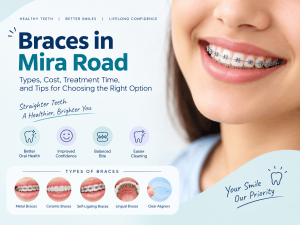
A confident smile starts with well-aligned teeth. Crooked, crowded, or gapped teeth affect appearance, but they also make cleaning harder and can strain your jaw. Fortunately, orthodontic treatment corrects these problems at almost any age.
If you plan to get braces in Mira Road, this guide covers everything you need. You will explore the available types, compare costs, understand how long treatment lasts, and learn how to select the right clinic.
Why Straight Teeth Matter
Straight teeth do more than improve your looks. They also support your health.
- Easier cleaning: Aligned teeth reduce plaque traps, which lowers the risk of cavities and gum disease.
- Better bite function: Proper alignment spreads chewing forces evenly.
- Reduced jaw strain: A balanced bite lowers the risk of jaw pain and headaches.
- Improved speech: Some alignment problems affect pronunciation.
- Higher confidence: People who like their smile tend to smile more.
Hence, orthodontic treatment benefits both appearance and long-term oral health.
Who Needs Braces?
You may benefit from braces if you have:
- Crowded or overlapping teeth
- Gaps between teeth
- Overbite (upper teeth protrude over lower teeth)
- Underbite (lower teeth sit ahead of upper teeth)
- Crossbite (some upper teeth sit inside lower teeth)
- Open bite (front teeth do not meet)
- Protruding front teeth
- Difficulty chewing or biting
Children often start treatment between ages 10 and 14, when permanent teeth have erupted and the jaw is still growing. Nevertheless, adults can achieve excellent results, and many do. Healthy teeth and gums matter more than age.
Types of Braces Available in Mira Road
Today’s patients can choose from several options. Each has strengths, so consider your lifestyle, budget, and the complexity of your case.
1. Traditional Metal Braces
These remain the most common option. Stainless steel brackets attach to the teeth and connect through a wire. Orthodontists adjust the wire regularly to move teeth into position.
Pros:
- Most affordable
- Effective for almost every case, including complex ones
- Durable and reliable
Cons:
- Most visible
- May cause initial irritation to cheeks and lips
2. Ceramic (Tooth-Coloured) Braces
Ceramic braces work like metal braces but use clear or tooth-coloured brackets that blend with your teeth.
Pros:
- Less noticeable
- Effective for many alignment issues
Cons:
- Cost more than metal
- Brackets may stain if you do not maintain hygiene
- Slightly more fragile
3. Self-Ligating Braces
These braces use a built-in clip instead of elastic bands. They reduce friction and sometimes allow fewer adjustment visits.
Pros:
- Easier cleaning
- Often more comfortable
- Possible shorter appointments
Cons:
- Higher cost than traditional metal braces
4. Lingual Braces
Orthodontists place lingual braces on the back surface of the teeth, so they stay hidden from view.
Pros:
- Nearly invisible
- Suitable for image-conscious professionals
Cons:
- Most expensive
- May affect speech temporarily
- Require specialist skill and longer adjustment time
5. Clear Aligners
Aligners use a series of transparent, removable trays that gradually shift teeth. You change trays every one to two weeks.
Pros:
- Nearly invisible
- Removable for eating and brushing
- Comfortable, with no wires or brackets
Cons:
- Highest cost among common options
- Require strong discipline, because you must wear them 20 to 22 hours daily
- May not suit severe cases
Braces Cost in Mira Road
Costs vary by clinic, material, and case complexity. As a general guide for Mumbai suburbs:
| Type of Braces | Approximate Cost Range |
|---|---|
| Metal braces | ₹25,000 – ₹50,000 |
| Ceramic braces | ₹40,000 – ₹80,000 |
| Self-ligating braces | ₹50,000 – ₹90,000 |
| Lingual braces | ₹1,00,000 – ₹2,50,000+ |
| Clear aligners | ₹1,00,000 – ₹3,50,000+ |
These ranges are approximate. Your exact fee depends on your diagnosis and treatment plan.
Besides the type of braces, other factors influence cost:
- Case complexity: Severe crowding or jaw problems need longer treatment.
- Treatment duration: More months mean more adjustments.
- Orthodontist’s expertise: Specialists with advanced training often charge more.
- Records and scans: X-rays, photographs, and digital scans add to the initial cost.
- Retainers: Some clinics include them, while others charge separately.
- Extractions or additional treatment: Certain cases need tooth removal or gum care.
Always request a complete estimate that lists every component. Many clinics offer instalment plans, which make treatment more manageable.
How Long Does Orthodontic Treatment Take?
Most patients wear braces for 12 to 24 months. Mild cases may finish in six to nine months, while complex cases can take longer. Several factors affect duration:
- Severity of misalignment
- Age (younger patients often respond faster)
- Type of appliance
- Your cooperation with appointments and instructions
- Oral hygiene
Missing appointments or ignoring instructions, such as wearing elastics, delays progress. Therefore, commitment plays a major role in finishing on time.
What to Expect During Treatment
Initial Consultation
The orthodontist examines your teeth, takes X-rays and photographs, and sometimes makes digital scans. Then the orthodontist explains your diagnosis and recommends options.
Fitting Day
On the day, the dentist cleans your teeth, bonds the brackets, and threads the wire. The process does not hurt, though your teeth may feel sore afterward.
Regular Adjustments
You visit every four to six weeks for adjustments. The orthodontist changes wires, checks progress, and addresses concerns.
Removal and Retention
Once teeth reach their ideal positions, the dentist removes the braces and fits a retainer. Retainers hold teeth in place while the bone and gums stabilise. Skipping them often leads to relapse.
Managing Discomfort
Mild soreness appears after fitting and after adjustments. It usually fades within three to five days. To feel better:
- Eat soft foods such as khichdi, yoghurt, and soups.
- Use orthodontic wax on sharp spots.
- Rinse with warm salt water.
- Take pain relief if your dentist recommends it.
Call your clinic if a wire pokes or a bracket breaks. Quick fixes prevent delays.
How to Care for Braces
Good hygiene protects your teeth during treatment. Food particles easily collect around brackets, so follow these habits:
- Brush after every meal. Use a soft brush and fluoride toothpaste.
- Use interdental brushes or floss threaders. They clean areas a regular brush misses.
- Rinse with fluoride mouthwash.
- Avoid sticky, hard, and chewy foods. Skip caramel, nuts, and ice.
- Limit sugary drinks. Sugar fuels plaque.
- Visit your general dentist for cleaning during treatment.
Foods to Eat and Avoid
| Safe Choices | Foods to Avoid |
|---|---|
| Idli, dosa, soft rotis | Hard candy, chikki |
| Boiled vegetables, dal | Popcorn, nuts |
| Bananas, papaya | Whole apples (cut them instead) |
| Pasta, soft rice dishes | Chewing gum, toffee |
| Yoghurt, paneer | Corn on the cob |
Braces vs. Aligners: Which One Fits You?
Both work well, yet they suit different people.
Choose braces if:
- Your case is complex.
- You prefer a lower cost.
- You find it difficult to follow daily wear schedules.
- You need precise control of tooth movement.
Choose aligners if:
- You want a discreet look.
- Your case is mild to moderate.
- You can commit to wearing them nearly all day.
- You prefer removable appliances for eating and cleaning.
Your orthodontist can tell you which option gives the best result for your teeth. Do not decide solely on advertising or price.
Braces for Children, Teens, and Adults
Children (ages 7–10): An early check-up helps detect jaw problems. Sometimes, interceptive treatment guides growth and reduces the need for extensive work later.
Teens: This age group sees the best response, because growth assists tooth movement. Colourful elastics even make braces fun.
Adults: Adult treatment continues to grow in popularity. Ceramic braces and aligners suit working professionals. However, adults must ensure their gums and bone are healthy first.
How to Choose a Dentist or Orthodontist for Braces in Mira Road
Orthodontics requires careful planning, so the practitioner matters. Evaluate these points:
- Qualifications: Look for specialised orthodontic training.
- Experience: Ask to see before-and-after results.
- Technology: Digital scans, 3D planning, and modern brackets improve accuracy.
- Transparency: The clinic should explain timeline, cost, and expectations clearly.
- Hygiene: Sterilisation standards must meet best practice.
- Accessibility: Regular visits require a convenient location.
- Support: Quick help with broken brackets or emergencies is essential.
If you want a clinic that offers comprehensive dental care, Cosmodent Implant Clinic provides orthodontic treatment alongside general, restorative, and implant dentistry. This integrated approach helps if you need extractions, fillings, or gum treatment before or during braces. People searching for the best dentist in Mira Road often value this convenience because one team coordinates all stages of care.
For those who live closer to Kandivali, a dental clinic in Kandivali offers the same standard of treatment. Meanwhile, residents of the area can visit a dentist in Mira Road East for a convenient first consultation.
Common Myths About Braces
Myth: Braces are only for teenagers.
Fact: Adults make up a growing share of orthodontic patients.
Myth: Braces hurt constantly.
Fact: Soreness appears briefly after adjustments and then fades.
Myth: Aligners work for every case.
Fact: Severe issues often respond better to fixed braces.
Myth: You can skip the retainer after braces.
Fact: Retainers prevent relapse and remain essential.
Myth: Braces weaken teeth.
Fact: Properly managed braces move teeth safely and improve long-term health.
Frequently Asked Questions
What is the best age for braces?
Most orthodontists recommend ages 10 to 14, but adults can start any time with healthy gums and teeth.
Can I play sports with braces?
Yes. Wear a mouthguard to protect your lips, cheeks, and teeth.
How often should I visit during treatment?
Most patients attend every four to six weeks.
Are extractions always necessary?
No. Extractions depend on how much crowding you have. Many cases finish without removing teeth.
What if I lose my retainer?
Contact your dentist immediately. Relapse can start within days.
Final Thoughts
Braces transform both your smile and your oral health. Whether you choose metal braces, ceramic brackets, or clear aligners, success depends on a skilled orthodontist, careful planning, and your commitment. Take the time to compare options, ask questions, and select a clinic that treats you as a partner.
Ready to start your journey? Book a consultation for braces in Mira Road and discover which option fits your smile, schedule, and budget.
One Response